
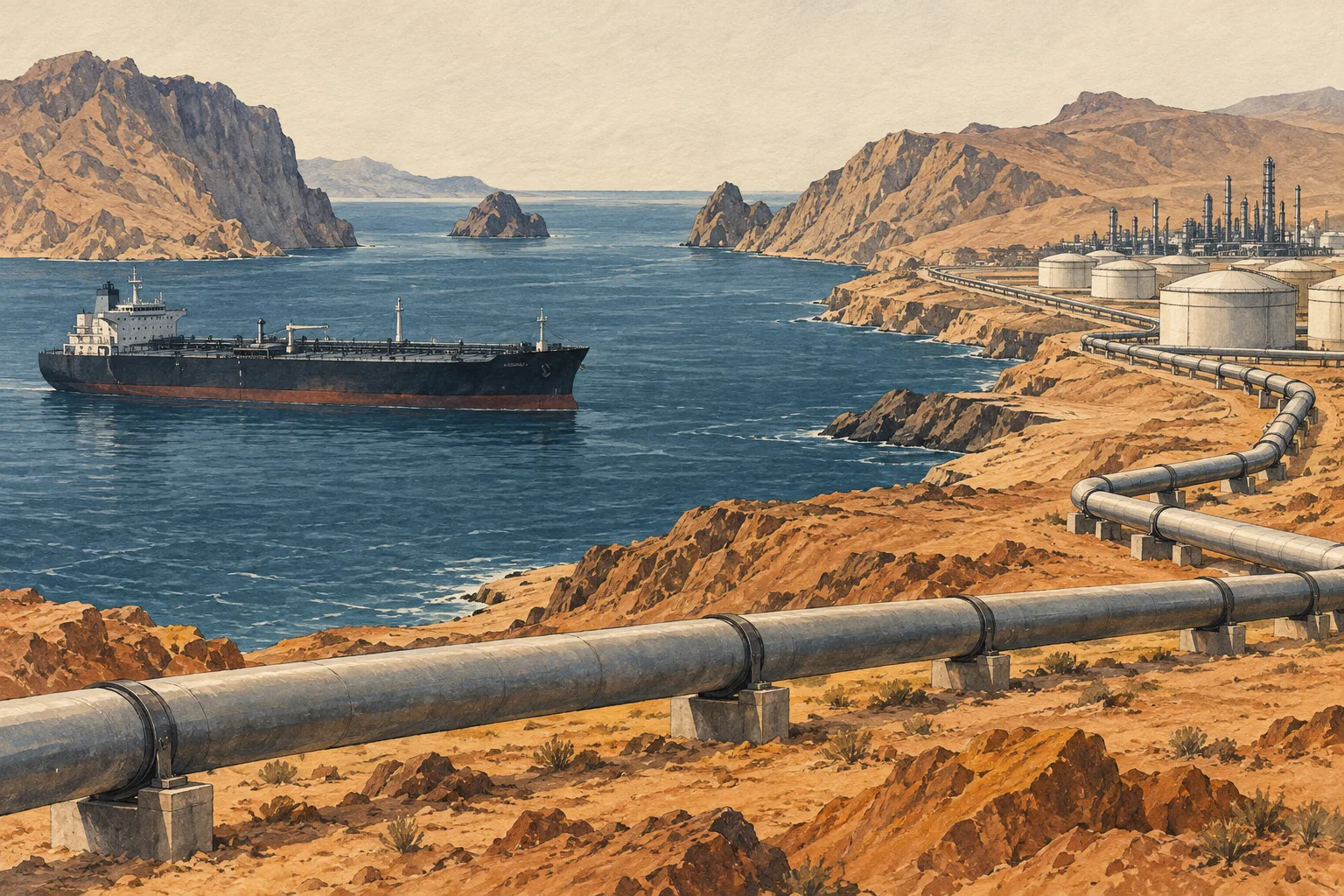
Oil is back above $100 a barrel, and the pressure is greater further down the supply chain. The International Energy Agency reports that global oil inventories fell by 95 million barrels in August, taking the decline since February to 507 million. U.S. diesel averaged more than $6 a gallon on Friday. The problem is reaching consumers through transport and fuel costs.
Attacks on Saudi Arabia's East-West pipeline on 10 September made an already strained system more vulnerable. The route carries crude to Yanbu on the Red Sea, bypassing the disrupted Strait of Hormuz. By Monday, regional officials told AP that repairs could take three to five weeks. Houthi advances around the southern Red Sea put pressure on the alternative shipping route too.
This is a supply shortage compounded by a transport and refining shortage. The IEA says more than 10 million barrels a day of Gulf production remained shut in during August, while refinery activity was below last year's level. Existing oil cannot meet demand if it cannot reach the right refinery, or if the resulting fuel cannot reach customers. Spare production capacity is useful only when the rest of that chain works.
The diesel squeeze has also entered diplomacy. On Sunday, Donald Trump urged Ukraine to stop attacking Russian diesel infrastructure. On Monday, Volodymyr Zelenskyy said Ukraine was ready to halt strikes if allies secured a genuine Russian commitment to spare Ukrainian critical infrastructure. That conditional position falls short of a verified ceasefire.
These constraints are slow to repair. Rerouting tankers takes time and raises freight and insurance costs. Refineries cannot freely substitute every crude grade. Higher diesel prices then reach trucks, farms and construction sites, while jet fuel puts pressure on airlines. Central banks face another inflation risk even where demand is weakening.
Watch the barrels that can actually be delivered, refined and used. Pipeline repairs, refinery availability, shipping access and inventories will tell us more about relief for consumers than the crude price alone.
Macro
Public Markets
M&A
Staying Diligent
The week of 14–18 September
Calendar and analysis as of 14 September; publication 15 September.
The Unhedged View
The AI race has a prisoner's dilemma.
On 12 September, Dario Amodei called for slower advances in frontier AI capabilities so safeguards could catch up. Sam Altman and Elon Musk expressed support. That is a meaningful public position. It is not yet evidence of a coordinated slowdown.
Suppose Anthropic delays its next model for six months. If its competitors do the same, everyone gains more time to test. If they continue, Anthropic risks losing ground. The collective benefit of restraint can conflict with each company's incentive to move first.
Governments face a similar problem. Washington may worry that restraint gives China an advantage; Beijing may distrust rules designed by U.S. companies. Investors, meanwhile, have funded infrastructure on expectations of continued progress. Agreement on the risks does not resolve those competing interests.
Verification therefore matters. Independent evaluations and access for external safety teams could make commitments more credible. But the practical questions remain: which capabilities trigger a delay, who judges the evidence, and what happens when a participant refuses?
A slowdown could also alter the timing of demand for chips, data centres and power. That is a scenario to examine, not a forecast implied by a public statement.
The test is whether these commitments change behaviour when restraint is costly. Shared concern is a starting point. Enforceable standards, credible verification and evidence that companies follow them are what would make it consequential.
In Other News
Where have all the hurricanes gone?
As of 12 September, the Atlantic had produced five tropical storms and no hurricanes: the latest such start in the reliable modern record, according to meteorologists cited by AP.
Warm water alone does not determine hurricane activity. El Niño tends to increase wind shear over the Atlantic, disrupting the organisation storms need to strengthen. NOAA's seasonal outlook explicitly weighs competing oceanic and atmospheric conditions.
The useful lesson for investors is modest. A favourable long-term trend does not guarantee a particular outcome. A company may correctly identify rising demand and still fail because financing, distribution or supply becomes the limiting factor. Models need to account for the interaction of those conditions, not simply identify a promising one.
And the season is not over. A quiet start does not eliminate the risk of a damaging storm.
The lesson: being right about a trend is only part of the analysis. You also need to understand what could prevent it from producing the expected result.
The Thinking Corner
When collective restraint makes a system safer, but acting alone puts each participant at a disadvantage, what evidence would make you trust voluntary coordination?
Latest from the team
Market commentary and field notes from the team, on The Felix View.